Within today’s global village it is difficult to understand just how distant Japan seemed in the 1960s…
This seems especially true of Japanese graphic design and posters compared with, say, Japanese industrial design or architecture.
In 1980, the Musee de l’Affiche, Paris, mounted an exhibition of Japanese poster designs. This presented the historical development
of Japanese graphic design, for the first time, to a wider public of non-professional designers.
In general, Japanese graphic culture
has been understood in terms of the historical style of ukiyo-e coloured woodcuts of the 18C and 19C.
The so-called floating world images of ukiyo-e eschewed the traditional images of aristocratic patronage and favoured themes
of popular entertainments and the street. Historically, this graphic style developed within its own traditions of flat-clour and bold
outlines and played an important part in the development of European poster styles at the end of the 19C through the
work of Toulouse Lautrec and others.
The Japanese posters of the 20C are far less well known.
During the 1960s, Japanese posters gradually became more familiar
through their appearance in the annual selections of graphic art published by Graphis and others.
Also, the membership of the Alliance Graphique Internationale (AGI), the international graphic design association had expanded,
in the 1950s and during the 1960s, to include a small number of Japanese designers.
The first Japanese designers to be part of AGI exhibited in Paris during 1955.
They included Yusaku Kamekura and Yoshio Hayakawa, both represented in the material here.
By the 1960s, they had been joined by Hiromu Hara, Kazumasa Nagai and Ryuchi Yamashiro.
In 1972, AGI exhibited in Japan for the first time, and more frequent exchanges between east and west began to take place
(Henrion 1989).
Hiromu Hara (1903 - 1986)
Hara worked as a teacher, where he became familiar with the design ideas of western modernism. With his colleague, the
photographer Kimura, he designed a giant photo-mural for the Japanese pavilion at the Paris 1937 World’s Fair.
After WW2 he was instrumental in the modernisation of Japanese print production and graphic design.
Yoshio Hayakawa (born 1917)
Hayakawa (along with Hara and Kamehura) was part of a small group of designers who, after WW2, embarked
on the modernisation of Japanese graphic design. He was instrumental in raising the professional standing of Japanese design.
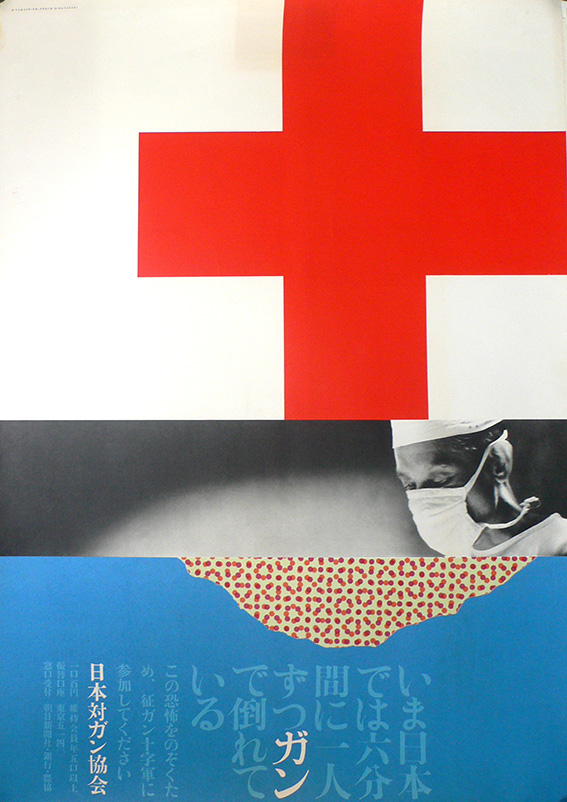
Yusaku Kamekura (1915 - 1997)
Kamekura
Famously designed the posters for the Tokyo Olympics in 1964 and a major figure in the
history of Japanese graphic design.
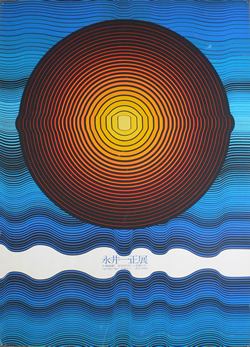
Kazumasa Nagai (born 1929)
Nagai was a founding partner of Nippon Design Centre in 1960 and has been at the forefront of Japanese graphic design since.
He has won many awards.
Ryuichi Yamashiro (1920 - 1997)
Yamashiro established the Japanese Design Centre in 1959 after a freelance career.
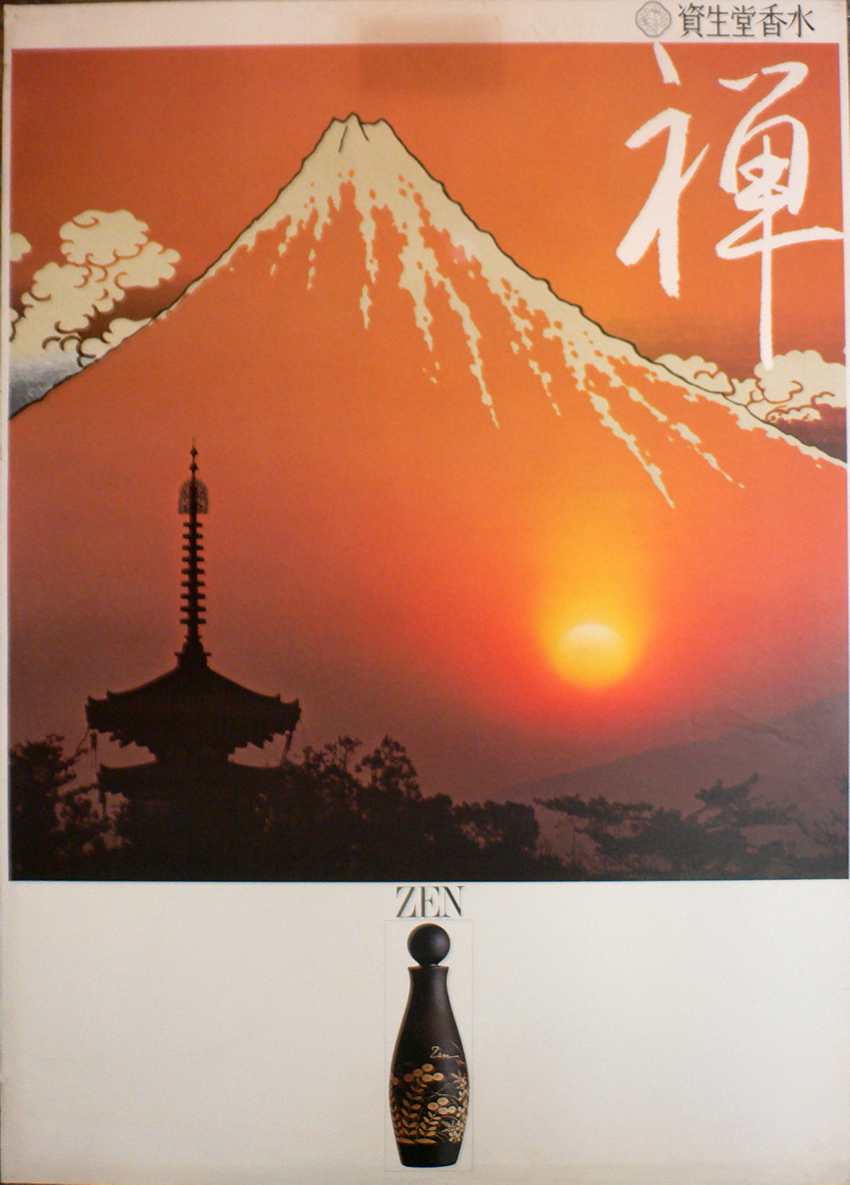
Makoto Nakamura (1926 - 2013)
After graduating from the Design Department of Tokyo Art University in 1948, Nakamura joined the advertising department of
Shiseido and served as an executive director of the advertising division and chief of the production division.
His work is in many international collections, including MOMA New York.